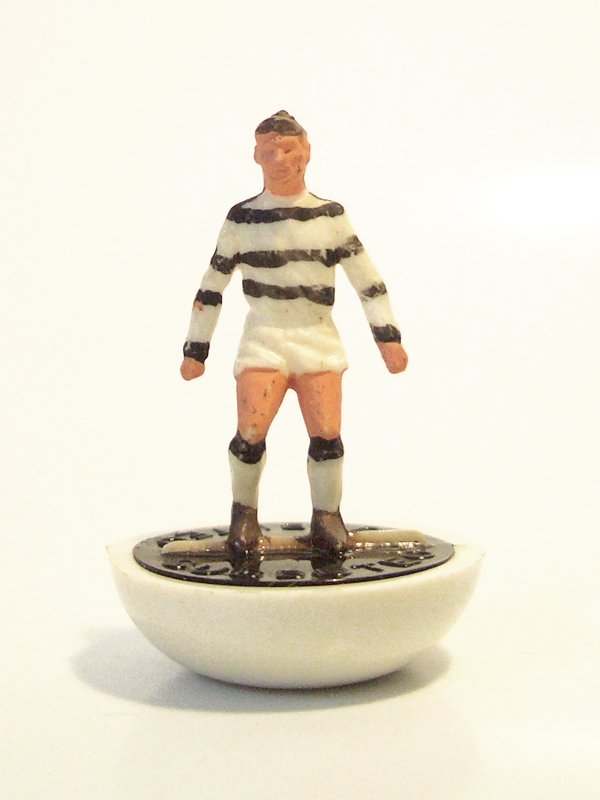
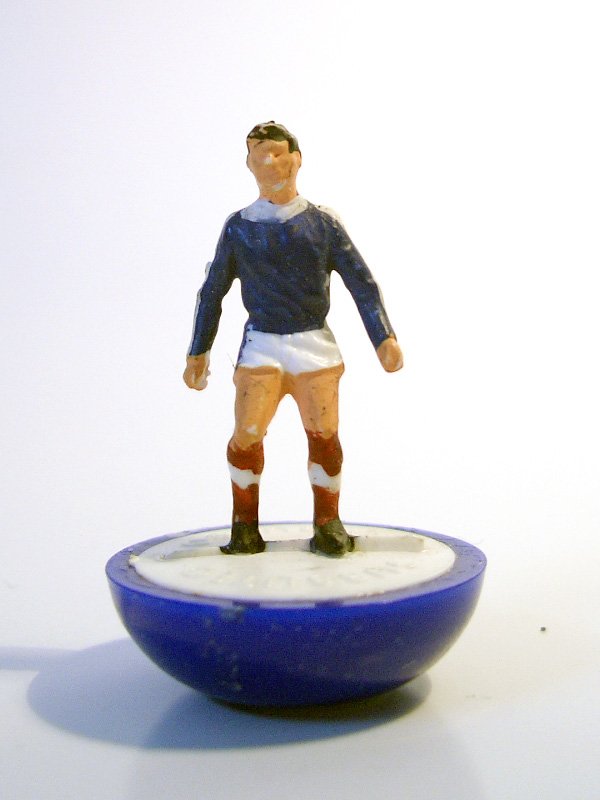
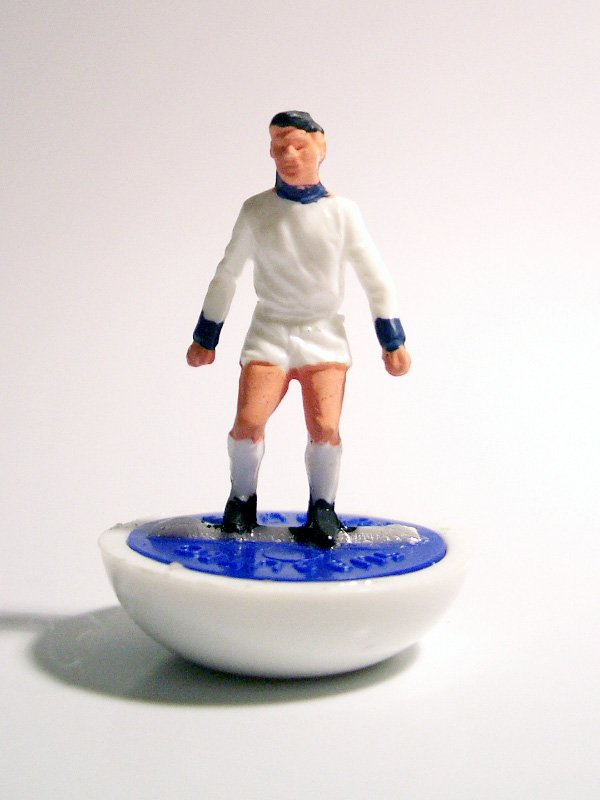
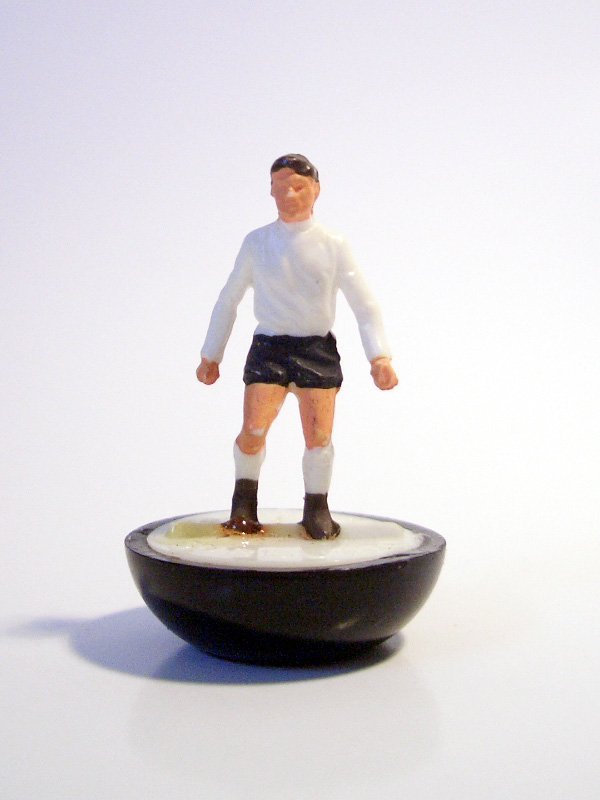
Eight kit families: clubs that took their colours from another club, out of friendship, admiration or pure chance. In the first round every heir meets its parent club.
Historic facts checked against sources ·
Inspired by true story, with some licence ·
Fantasy invented cups with real clubs
Many famous shirts were not born where we see them today. They arrived in a crate shipped from Nottingham, with an English student in Zurich, on a tour of South America or because of a missed ferry at Southampton. The Kit Heritage Cup puts these family ties on the pitch: the stories are true, the tournament is ours.
Not every story is equally certain. Each family carries a stamp that says how solid its story is:
Documentedconfirmed by the sourcesHypothesisone of the possible versionsTraditionso the story goes, without direct proofLegenda good story, but probably untrue
The entrantsThe eight families
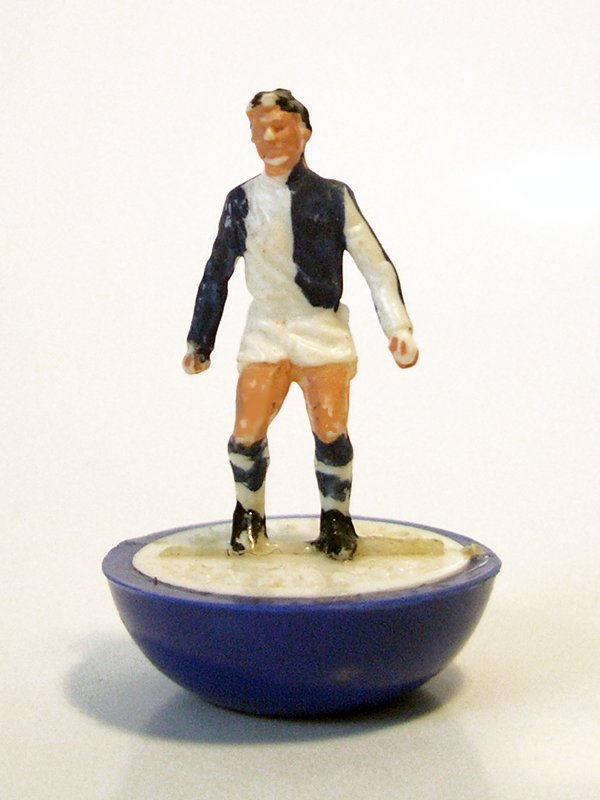
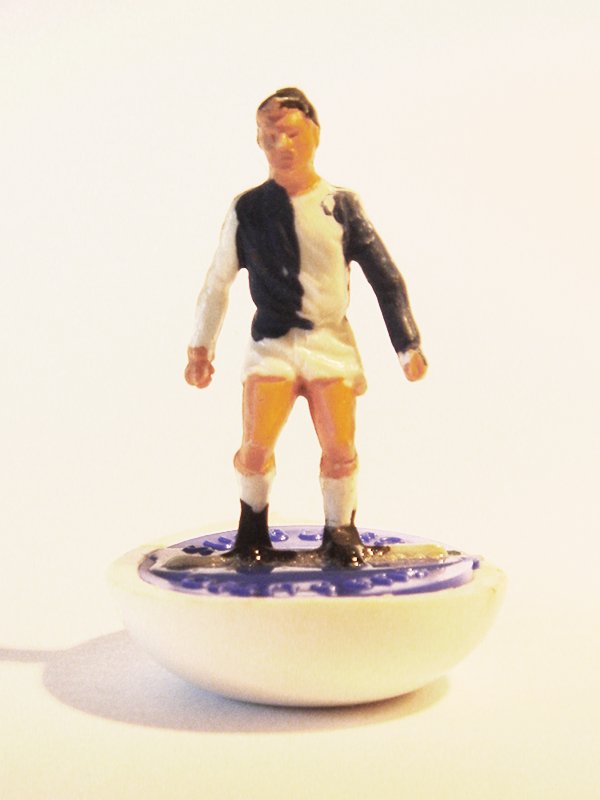
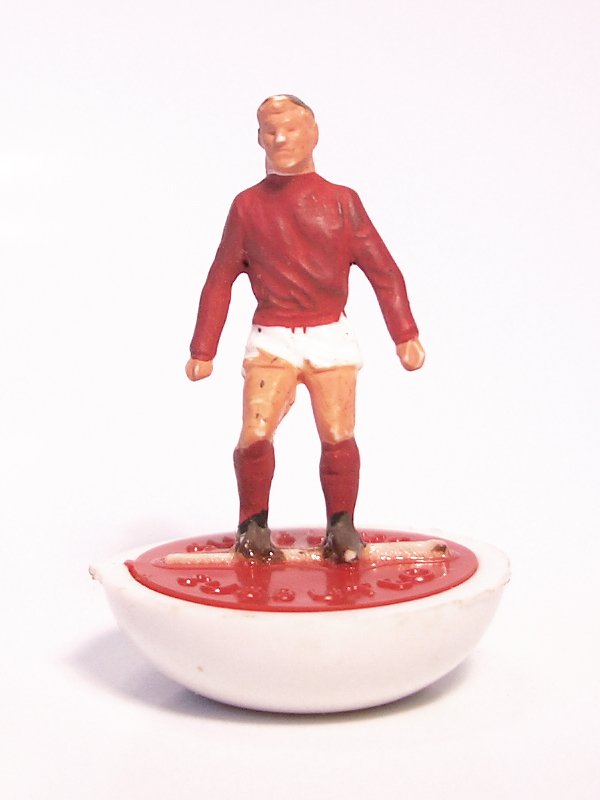
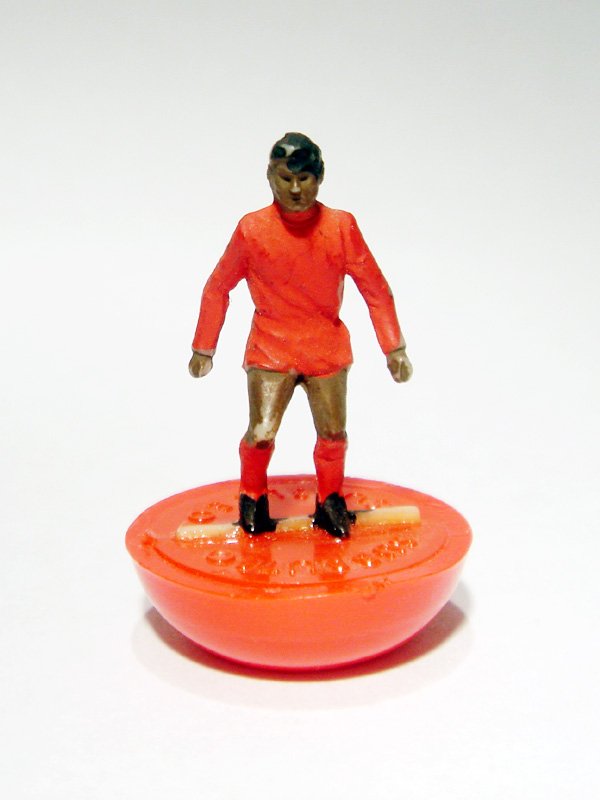
Sixteen teams, all in the HW Catalogue. The parent's and heir's shirts are almost twins: so, wherever the catalogue allows, each pair uses two figures with different-coloured bases. Click a photo to enlarge it.
Documented
Family I
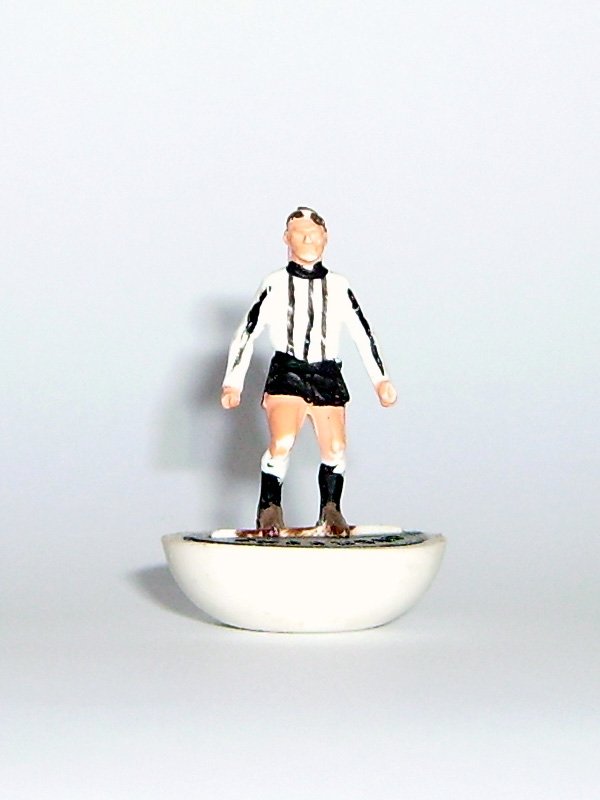
The parentNotts CountyRef 8A · white with black stripes · white base
→1903
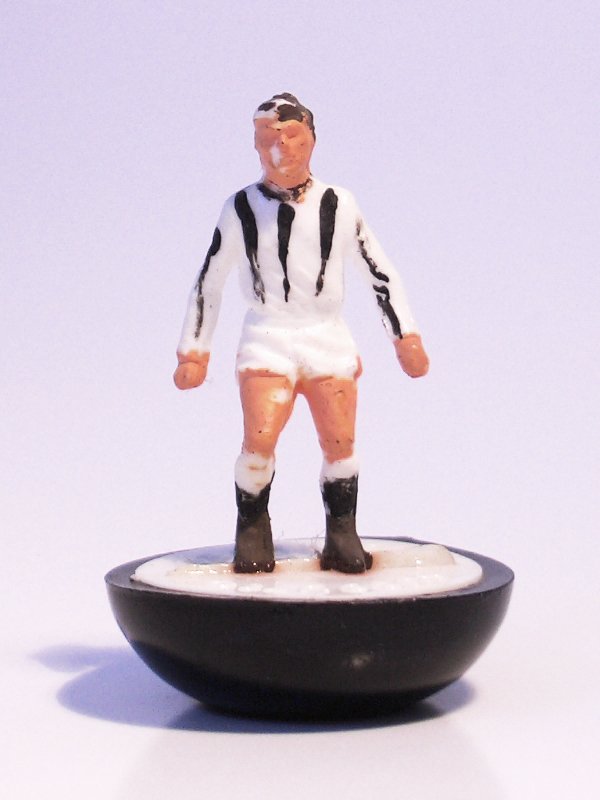
The heirJuventusRef 34 · black and white · black base
Juventus's first shirts were pink. In 1903 the Englishman John Savage asked a friend in Nottingham for a more hard-wearing replacement, and from Nottingham came the black and white stripes of Notts County, the oldest club in the Football League. The bond has endured: in 2011 it was Notts County who opened the Juventus Stadium.
Documented
Family II
The parentBlackburn RoversRef 31 · blue and white halves · blue base
→1886
The heirGrasshopperRef 108 · blue and white halves · white base
On 1 September 1886 an English student, Tom E. Griffith, founded Grasshopper Club in Zurich. With a donation of twenty francs the first kit was bought: half white and half blue, like Blackburn Rovers, the great team of those years.
Documented
Family III
The parentNottingham ForestRef 1A · red · white base
→1905
The heirIndependienteRef 297 · red · red base
In 1905 Nottingham Forest toured Argentina and thrashed Alumni 6-0. In the stand sat Arístides Langone, president of Independiente: he proposed swapping the club's white and blue for Forest's red, which Forest had in turn taken from Garibaldi. Ever since, Independiente have been "El Rojo".
Documented
Family IV
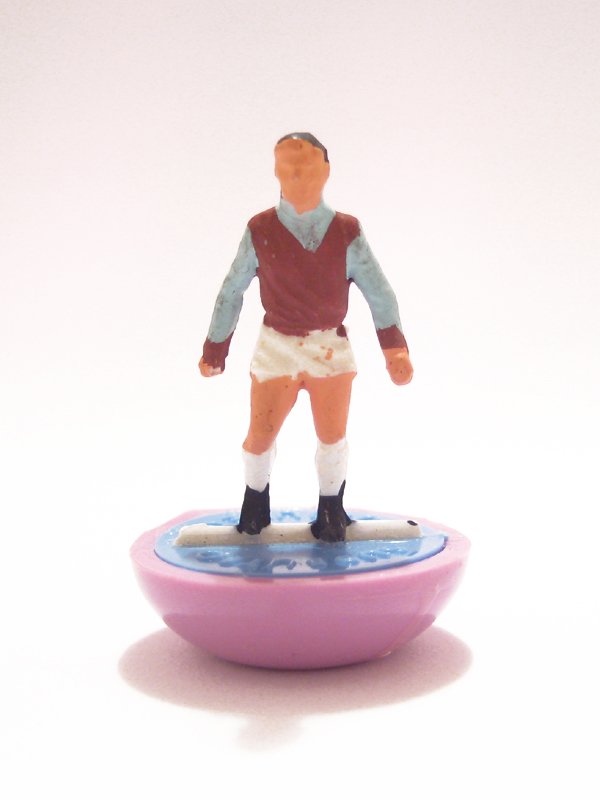
The parentAston VillaRef 74A · claret and sky blue · pink base
→1905
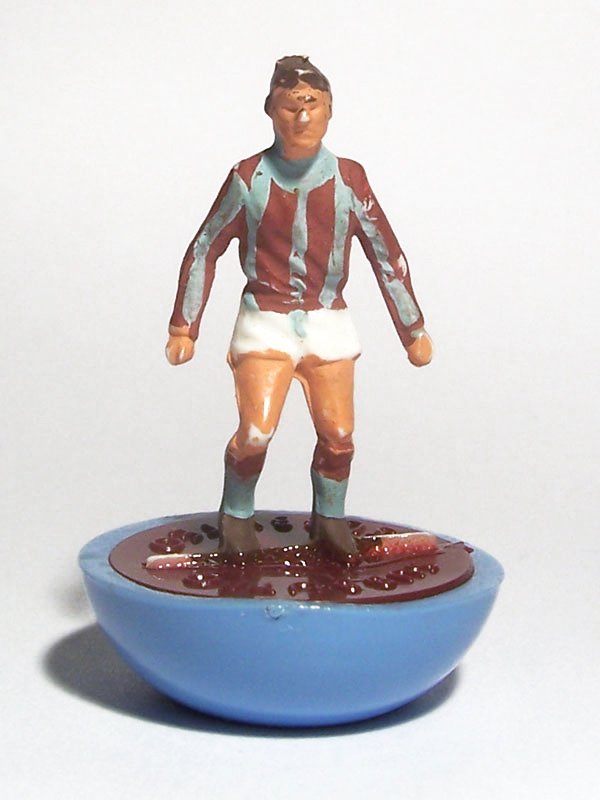
The heirCrystal PalaceRef 40A · claret and sky blue · light blue base
When the professional Crystal Palace was founded in 1905, a helping hand came from Edmund Goodman, an Aston Villa employee who went on to become its manager. The new club wore Villa's claret and sky blue. Seventy years later Malcolm Allison changed it to red and blue stripes: inspired, this time, by Barcelona.
Hypothesis
Family V
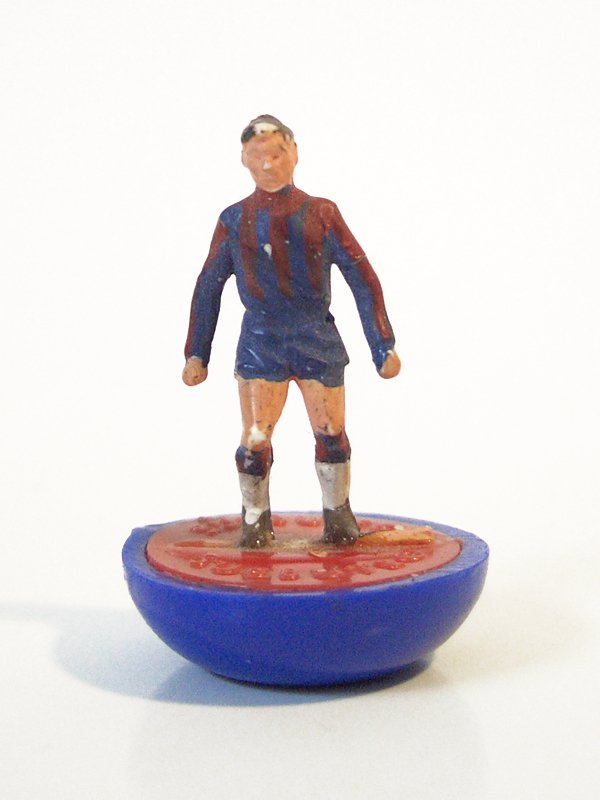
The parentBaselRef 107 · blue and claret · blue base
→1899
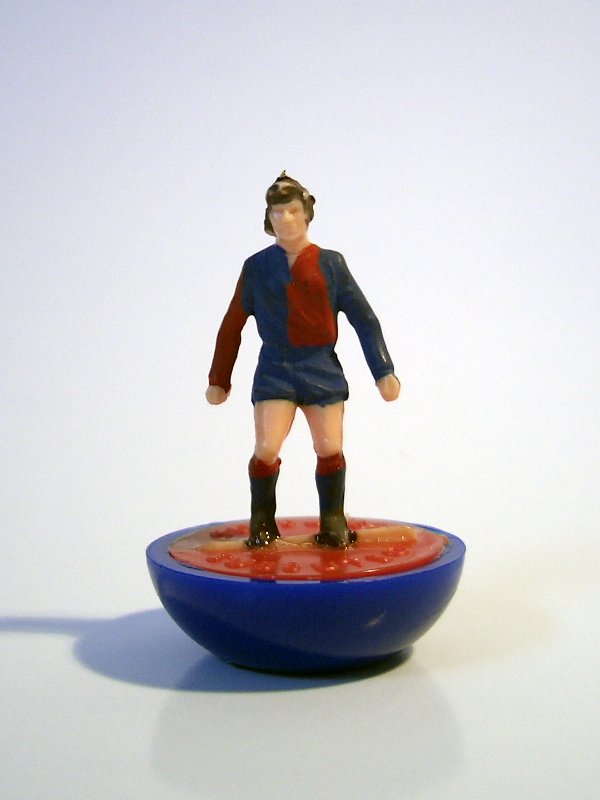
The heirBarcelonaRef 19A · blue and claret · blue base
Barcelona's blaugrana is a small mystery. According to the most popular theory, the Swiss founder Joan Gamper, who had also played as a guest for Basel back home, brought those colours to Barcelona. The club's official version, however, credits the Witty brothers, who had seen them on the rugby team of their English school, Merchant Taylors'. Either way, the two teams look like two peas in a pod.
Tradition
Family VI
The parentQueen's ParkRef 24 · white with black hoops · white base
→1872
The heirScotlandRef 318 · navy blue · blue base
On 30 November 1872, at Hamilton Crescent, Scotland played England in the first international match in history, wearing navy blue. All eleven Scots were Queen's Park members. Tradition has it that the national team's blue came from there; Queen's Park today play in black and white hoops.
Legend
Family VII
The parentPreston North EndRef 135 · white · white base
→1898
The heirTottenhamRef 154 · white · black base
In 1898 Tottenham switched to white shirts and navy shorts, "in honour of Preston North End", the Invincibles of the first Football League. A 1921 club history said so, but Tottenham themselves admit there is no direct evidence. A fine legend, and one McGregor's Twelve would not mind.
Documented
Family VIII
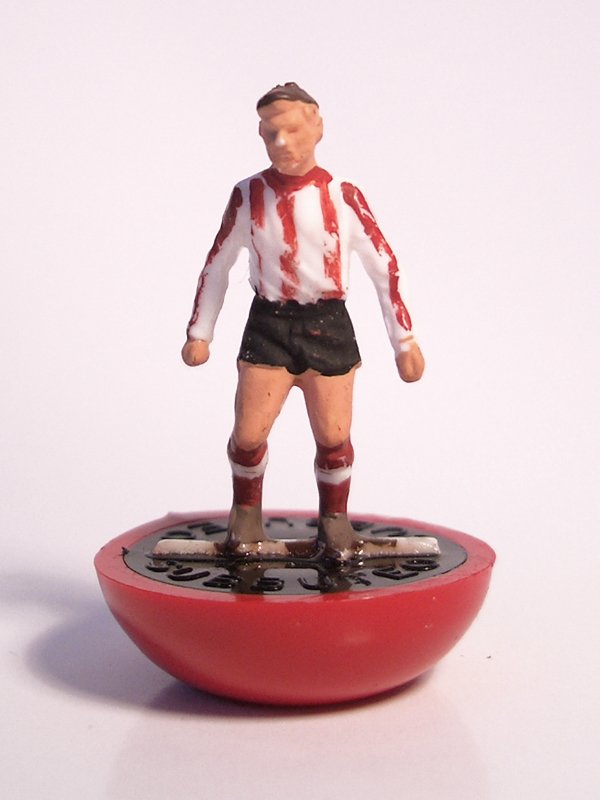
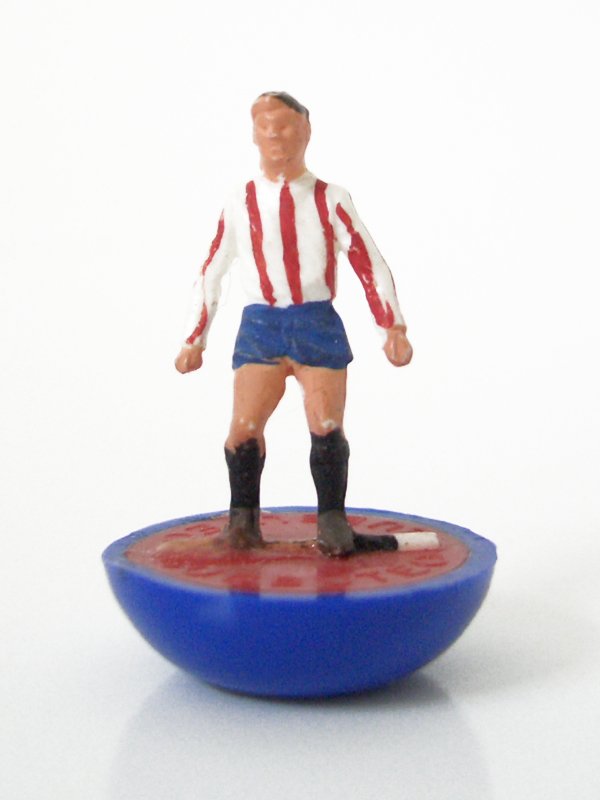
The parentSouthamptonRef 9 · red and white stripes · red base
→1910
The heirAtlético MadridRef 226 · red and white stripes · blue base
A story in three steps. In 1909 Juan Elorduy of Athletic Bilbao was supposed to buy Blackburn Rovers-style shirts in London; he could not find any and, while waiting for the ferry at Southampton, bought fifty red and white Saints shirts instead. Athletic wore them from January 1910, and soon afterwards their Madrid branch, the future Atlético, did the same. Southampton, in other words, are the grandfather of the Colchoneros.
The rulesThe family derby
First round: parent against heir. The round of sixteen is made up of the eight family derbies; from the quarter-finals on, the draw proceeds as normal.
Twin shirts, different bases. In every derby the two teams are told apart by the colour of their bases, as shown on the cards: for example Notts County on a white base and Juventus on a black base. The only exception: in the catalogue Basel and Barcelona share the same blue base, so for that derby mark one of them with a small sticker on the edge of the base, or use a spare base.
Pupil and master. If the heir knocks out the parent in the first round, it has "surpassed the master": a small round of applause is compulsory.
Not many teams? The derby format also works with four or six families; teams without their parent, or their heir, are drawn freely.
More stories of inherited colours, for now without a matching team in the HW Catalogue. Anyone who wants can field them with a figure in similar colours.
Club
Colours taken from
Year
Status
Sparta Rotterdam
Sunderland
1899
Documented
Sparta Prague
Woolwich Arsenal
1906
Documented
Partizan Belgrade
Juventus
1957–58
Documented
Sporting Braga
Arsenal
1945–47
Documented
Derry City
Sheffield United
1934
Documented
Sevilla (second kit)
Sunderland
1909
Documented
Corinthians (São Paulo)
Corinthian FC
1910
Documented
Real Betis
Celtic
1910–14
Hypothesis
Arsenal
Nottingham Forest
1886
Hypothesis
Boca Juniors
the flag of a Swedish ship
1906
Legend
West Ham
Aston Villa
1899
Legend
Burnley
Aston Villa
1910
Legend
Leeds United (all white)
Real Madrid
1960
Legend debunked
For Boca Juniors the ship is recorded as the Drottning Sophia; for Leeds, the all-white kit came in 1960 under Jack Taylor, before Revie, to stand out better under the floodlights.
Further readingSources
Juventus.com (in Italian): John Savage and Notts County's black and white

 The parentNotts CountyRef 8A · white with black stripes · white base
 The heirJuventusRef 34 · black and white · black base